What’s covered
- The shift toward agile localization in game development
- The hidden cost of fragmented localization
- Empowering agile localization with integrated platforms
- Real-world results and competitive advantages
- Frequently asked questions
- Conclusion
During Gridly’s recent virtual launch event, CEO Anna Albinson revealed a fundamental shift in how successful game studios approach localization: “Global readiness is no longer something that you add – it’s something that you build in from the start.” This insight captures why traditional text-focused localization strategies are failing modern studios and emphasizes the urgent need for agile localization workflows in game development.
The virtual launch demonstrated how localization goes far beyond translating dialogue and menu text. Modern games are multimedia experiences that blend text, audio, images, animations, and interactive elements, all requiring careful adaptation for global audiences. As Christoffer Nilsson, Gridly’s Chief Product Officer and former CEO, noted during the presentation, the industry is moving toward “agile and continuous localization as the norm,” where an effective agile localization workflow must be embedded into game development processes from day one.
The shift toward agile localization in game development
Why traditional workflows break down
The virtual launch presentation highlighted a critical problem with conventional approaches to game localization. Traditional methods create content fragmentation where content is scattered across different systems with lots of copying, pasting, exporting and importing, making it difficult to maintain an efficient agile localization workflow.
Consider the typical game development scenario where a dialogue scene requires updates based on player feedback. In traditional workflows, this simple change triggers a cascade of manual handoffs between different systems and teams. The updated script needs retranslation, voice actors must re-record lines in multiple languages, subtitle timing requires adjustment, and related UI elements may need modification. Each handoff creates opportunities for errors, version mismatches, and lost context that slow down any agile localization workflow.
Modern game development demands faster iteration, but traditional localization workflows were designed for waterfall development where content remained static once “finished.” The reality is that games evolve constantly throughout development, and agile localization workflows must accommodate this fluid environment.
Explore the modern game localization workflow
The shift to continuous agile localization
Agile localization treats translation and cultural adaptation as ongoing development activities rather than discrete project phases. This approach enables an optimized agile localization workflow that provides:
- Faster response to market feedback through iterations
- More iterative quality improvement
- Better games for global audiences
- Reduced localization bottlenecks in development
Anna’s presentation revealed how game studios are adapting to this new reality. As she noted during the virtual launch, users are joining platforms earlier in the development cycle and staying active for longer periods, signaling a fundamental shift toward continuous rather than batch processing in agile localization workflow design. This behavioral change reflects the industry’s recognition that agile localization provides competitive advantages in speed, quality, and cost efficiency.
Additionally, Anna shared compelling data about AI adoption: the percentage of users actively using AI-powered capabilities in their agile localization workflow has moved from 15% to 50% in just two years, demonstrating that AI is becoming a trusted part of how modern games implement localization.
The hidden cost of fragmented localization
Let’s dig deeper into the traditional workflows for localization and what they entail.
Copy-paste hell: A cautionary tale
The virtual launch included compelling examples of how traditional localization workflows create operational nightmares. Christoffer shared how one client struggled with sending players push notifications across millions of devices in 15 different languages using manual workflows.
“Before Gridly, it was a pure copy paste hell for our client and that’s not fun,” Christoffer noted. This example illustrates a common pattern: what should be a simple operational task becomes a complex, error-prone process when an agile localization workflow is fragmented across multiple systems.
The push notification scenario reveals several critical problems with traditional approaches:
- Manual copying and pasting across multiple different language files
- No centralized coordination between translation teams
- Error-prone handoffs between content creation and distribution systems
- Inability to track changes or maintain consistency across languages
- Significant time delays that impact real-time communications with players
The dependency spaghetti
Christoffer also highlighted dependency tracking as a critical pain point in traditional workflows: “Change tracking is a common pain point. It gets even more complex when you try to have multi-dependencies such as having audio recordings relying on translated dialogue.”
This dependency problem multiplies across complex game projects. When source content changes, traditional systems fail to automatically identify all affected downstream elements. For example, updating a character’s name affects:
- Their dialogue throughout the game
- Achievement descriptions that reference the character
- Marketing copy featuring the character
- Audio file naming conventions
- Subtitle displays throughout the game
Without automated dependency tracking, these changes require manual coordination across multiple teams and systems, creating opportunities for errors and missed updates that can break the player experience.
Lost context and quality issues
Traditional approaches lose crucial context when fragmented systems cannot support the same type of contextual metadata. When translators work without visual context, character descriptions, or usage examples, they make decisions in isolation that may require costly revision later in the agile localization workflow. This context loss directly impacts both quality and efficiency, requiring additional review cycles and rework that slows time-to-market.
Empowering agile localization with integrated platforms
These challenges have driven the development of integrated localization platforms that address fragmentation at its source. This integrated approach solves the fundamental problems that prevent truly effective agile localization workflow implementation.
Breaking down traditional silos
Unified localization platform approaches directly address the fragmentation problems that plague traditional workflows. Modern agile localization platforms create single environments that unify teams and content while maintaining flexibility for integration with existing development ecosystems.
Effective platforms structure their approach with integrated modules:
- Content management system for creating and organizing content with metadata and automations.
- Translation management system for coordinating translation processes.
- Computer-assisted translation tools for translators and editors to work efficiently.
When content management, translation coordination, and linguistic tools operate as separate systems, the handoffs between them create bottlenecks. By unifying these functions, teams can implement genuine agile localization without the friction of constant data exchange between incompatible systems.
Streamlined agile localization workflow in action
Returning to the push notification example, integrated platform approaches transform the entire agile localization workflow. Using streamlined processes with API connectivity, teams can:
- Create notification content in centralized content management systems
- Coordinate translation across 15 languages through integrated translation management
- Deliver final content directly to distribution systems via API
This eliminates the “copy-paste hell” by creating single workflows that handle content creation, translation coordination, and delivery automatically. The transformation from manual chaos to streamlined automation demonstrates the competitive advantage that an optimized agile localization workflow provides.
Check out Gridly API’s capabilities
Modern integrated agile localization platforms address dependency management that traditional systems can’t handle. When developers update source content, the system automatically flags affected translations, audio files, and related assets, ensuring nothing falls through the cracks during rapid iteration cycles.
This smart tracking system prevents the cascade of manual coordination that traditional workflows require, enabling faster iteration while maintaining quality and consistency across all content types and languages in an agile localization workflow.
Rich context for translators
Modern solutions provide translators with comprehensive context through an enhanced agile localization workflow including:
- Screenshots and visual references through multimedia content support
- Character information from reference systems
- Relevant glossary terms automatically assembled for each content segment
- Context about content usage and purpose through organized content structures
This comprehensive context enables translators to make better initial decisions that require fewer revisions, supporting the faster iteration cycles that agile localization demands while improving translation quality.
Michael Souto, Gridly’s Business Development Director, provided a live demonstration during the virtual launch showing how integrated systems enable seamless agile localization workflow implementation.
Automated quality assurance
Agile localization requires speed-matching quality assurance. Modern localization platforms check immediately when translators submit their work to identify:
- Missing tags detection using automated validation rules
- Spelling errors
- Formatting consistency verification
- Technical constraint validation
These automated validations catch common issues before they reach human reviewers, enabling faster feedback cycles and reducing the overall time from content creation to localized delivery in an optimized agile localization workflow.
Learn more about automated QA in Gridly
Real-world results and competitive advantages of agile localization workflows in game development
Teams implementing agile localization through integrated platforms see significant competitive advantages. The transformation from manual, fragmented workflows to automated, unified processes creates measurable benefits that directly impact business outcomes.
Speed advantages: Traditional workflows that take weeks to propagate content changes can be reduced to days or hours with integrated systems. The push notification example demonstrates this transformation – what was previously “copy paste hell” across 15 languages became an automated workflow that eliminates manual coordination entirely.
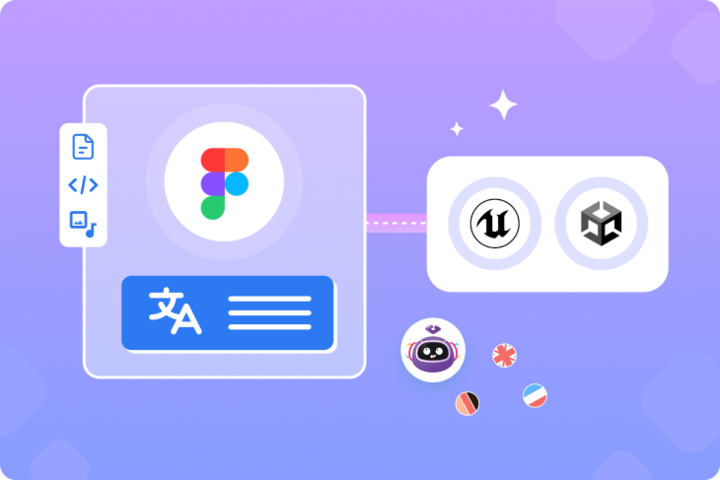
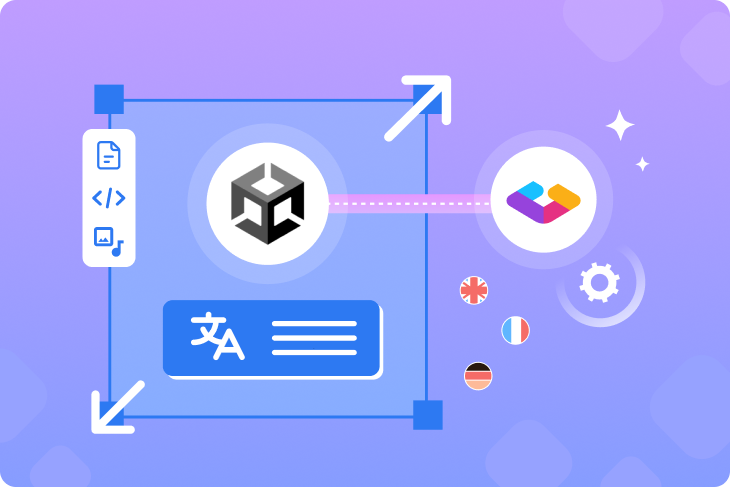
Operational efficiency: Automated dependency tracking prevents the cascade of manual coordination that traditional workflows require. When developers update source content, systems automatically flag affected translations, audio files, and related assets – eliminating the time-consuming detective work of identifying what needs updating. Additionally, by implementing modern localization platforms that support integration capabilities with game engines like Unity and Unreal Engine, plus API access for custom workflows, companies can ensure agile localization stays synchronized with rapid development iteration without coordination overhead.
Quality improvements: Integrated platforms provide translators with comprehensive context including screenshots, character information, translation memory, and glossary terms. This rich context enables better initial translation decisions, reducing revision cycles and improving overall localization quality.
Frequently asked questions
What is agile localization in game development?
Agile localization treats translation and cultural adaptation as continuous development activities rather than a single phase that happens after the game is content-complete. Instead of handing off a finished script to translators at the end of production, agile localization embeds localization into every sprint or update cycle - so content is translated, reviewed, and validated in parallel with development. This approach reduces bottlenecks at launch, enables faster post-launch content updates, and produces better results for global audiences.
How is agile localization different from traditional game localization?
Traditional game localization follows a waterfall model: content is frozen, exported in bulk, sent to translators, returned, and integrated manually before a release. This works when games ship once and rarely change, but it breaks down under modern development conditions where content evolves constantly and live service games push updates weekly. Agile localization replaces batch handoffs with continuous, automated workflows that keep translation synchronized with development at all times — cutting weeks of delay from the release cycle.
Why do traditional localization workflows break down in game development?
Traditional workflows fragment content across disconnected systems and rely on manual handoffs — exporting files, emailing spreadsheets, copy-pasting across language versions — that create compounding errors at scale. When a single source string changes, teams must manually track every downstream element it affects: translated dialogue, audio recordings, subtitle timings, achievement descriptions, and related UI. Without automated dependency tracking, these cascading updates are error-prone and time-consuming, creating bottlenecks that conflict directly with agile development cycles.
What is dependency tracking and why does it matter for game localization?
Dependency tracking is the ability of a localization platform to automatically identify all content elements affected when a source string changes. In a game, a single change — such as updating a character’s name - can affect their dialogue, achievement descriptions, marketing copy, audio file naming, and subtitle displays throughout the project. Without automated dependency tracking, each of these updates requires manual coordination across multiple teams. With it, the system flags affected content automatically, ensuring nothing is missed and reducing the risk of inconsistencies reaching players.
What are the hidden costs of fragmented game localization?
Fragmented localization creates costs that compound over time and are often invisible until they cause a launch delay or quality incident. Manual copy-pasting across language files introduces errors that require expensive rework. Context lost during handoffs between disconnected systems leads to mistranslations that require additional review cycles. Version mismatches between development and translation systems mean some translated content never makes it into the build, or outdated versions ship instead of approved ones. These inefficiencies also make it nearly impossible to scale to additional languages without proportionally increasing headcount.
When should studios integrate localization into the game development process?
From day one. The industry shift toward agile localization reflects a clear lesson: global readiness is something you build in, not something you add at the end. Studios that integrate localization tooling and workflows from the start of development avoid the late-stage scrambles that delay launches and drive up costs. Early integration also means translators can flag ambiguous source content while changes are still cheap to make - rather than discovering context problems after voice recording is complete.
Why is providing context to translators so important in game localization?
Translators working without visual context, character descriptions, or usage examples must make assumptions about how and where a string appears — and those assumptions are frequently wrong. A button labelled “Back” means something different in a settings menu than in a combat screen, and that difference may require different translations in some languages. When context is missing, translators make individually reasonable decisions that collectively produce inconsistent results, requiring costly revision rounds. Screenshots, character notes, glossary terms, and content purpose descriptions all reduce the rate of rework significantly.
How does automated quality assurance work in agile localization workflows?
Automated QA in agile localization runs validation checks at the point of submission rather than waiting for a dedicated review phase at the end of the project. Checks typically include missing or malformed tag detection, placeholder consistency, spelling errors, formatting rules, and technical constraints like character limits. By catching these issues immediately, automated QA reduces the number of errors that reach human reviewers, shortens feedback cycles, and allows human review time to focus on linguistic quality and cultural appropriateness rather than technical errors.
What competitive advantages does agile localization provide game studios?
Studios with mature agile localization workflows can respond to player feedback faster, ship post-launch content in all supported languages simultaneously, and scale to additional markets without proportional increases in localization overhead. Content changes that previously took weeks to propagate across all languages can be completed in days or hours. The ability to localize live-service content - seasonal events, patches, new characters - at speed is increasingly a competitive differentiator in global markets where players expect parity between regions.
How does Gridly support agile localization workflows in game development?
Gridly provides an integrated platform that combines content management, translation management, and computer-assisted translation in a single environment, eliminating the handoffs between disconnected systems that create bottlenecks in traditional workflows. Native plugins for Unity and Unreal Engine allow strings to be pushed and pulled directly without manual file exports. Automated dependency tracking flags affected content when source strings change. API connectivity enables custom workflow automation, including direct integration with content distribution systems. Built-in automated QA validates translations at submission, and branching and merging support parallel development across multiple teams working on the same localization project simultaneously.
Conclusion
The insights from Gridly’s virtual launch event reveal how agile localization has become a critical competitive differentiator in global game markets. Studios that embrace integrated workflows gain measurable advantages: faster time-to-market, predictable costs, higher quality translations, and the ability to scale across more languages efficiently.
The competitive edge comes from breaking down traditional silos between content creation, translation, and implementation. While competitors struggle with “copy-paste hell” and manual coordination across fragmented systems, forward-thinking studios use seamless workflows to respond quickly to market demands and maintain consistency across all target markets.
As the gaming industry becomes increasingly global, agile localization isn’t just an operational improvement – it’s a strategic advantage that determines which studios can successfully compete in international markets.
For teams ready to integrate agile localization workflows in their game development process, explore how Gridly can become your game localization platform.
This blog post contains insights extracted from Gridly’s Virtual launch event. Watch the full Gridly’s virtual launch on YouTube.